
Lead generation is the process of finding people who might be interested in buying what you sell. Think of it as building a list of potential customers who have shown real interest in your business. When someone gives you their email address or phone number because they want to learn more about what you offer, that person becomes a lead. These leads are valuable because they’ve already raised their hand to say they’re interested.
This guide breaks down everything you need to know about generating leads for your business. You’ll learn why leads matter, how to start getting them step by step, and the different types of leads you might encounter. You’ll also discover practical methods you can use right away and common mistakes that waste time and money. Whether you’re just starting out or tried before without success, this article gives you a clear path forward.
Why lead generation matters for your business
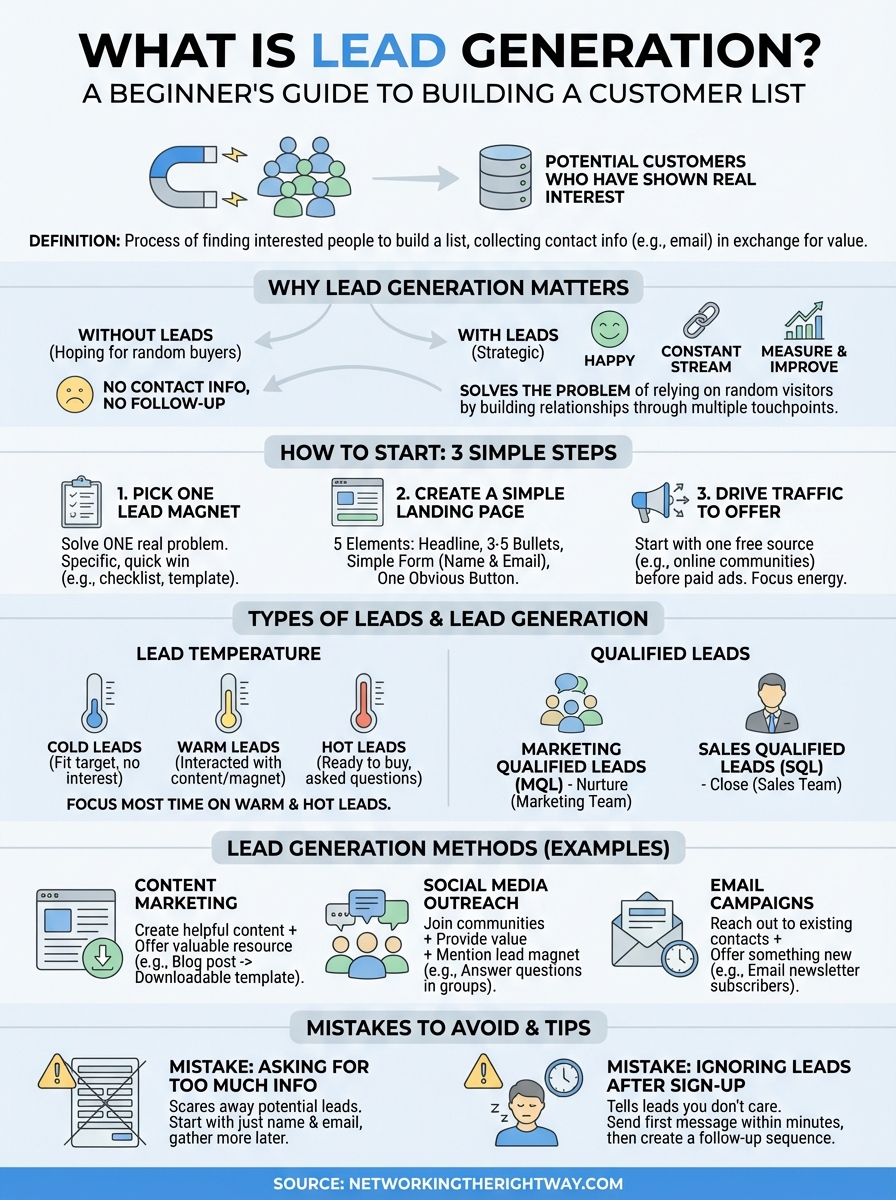
Your business needs a constant stream of interested people to stay profitable. Lead generation solves this problem by bringing you potential customers who already care about what you sell. Without it, you’re waiting for random website visitors to magically turn into buyers, which rarely happens. Most people need multiple touchpoints with your brand before they trust you enough to make a purchase, and leads give you the chance to create those touchpoints.
Why most businesses fail without consistent leads
Businesses without lead generation run on hope instead of strategy. They spend money on ads that bring traffic but capture zero contact information, so when visitors leave, they’re gone forever. You lose the ability to follow up, build trust, or remind people you exist. Smart businesses collect leads first and make sales second because they understand that relationship building takes time.

The difference between struggling and thriving often comes down to whether you’re building a list of interested people or starting from zero every single day.
Lead generation also helps you measure what works. When you track how many leads you get from each source, you can double down on winners and cut what wastes your money.
How to start generating leads step by step
You don’t need fancy tools or technical skills to start generating leads today. The process breaks down into three simple steps that anyone can follow, even if you tried before and felt overwhelmed. When you understand what is lead generation and apply these basics correctly, you’ll start building your list within days instead of waiting months for results.
Pick one lead magnet that solves a real problem
Your lead magnet is what you offer in exchange for someone’s contact information. Choose something specific that solves one clear problem your audience faces right now. A five-page PDF checklist beats a 50-page ebook because people want quick wins, not homework. Your lead magnet should be something they can use within minutes of downloading it.
Examples that work include checklists, templates, quick-start guides, or resource lists. Test one idea first before creating multiple options. You’ll learn what your audience actually wants instead of guessing, and one strong lead magnet beats ten mediocre ones every time.
Create a simple landing page
Your landing page needs five elements and nothing else. Start with a clear headline that tells people exactly what they’ll get and why it matters to them. Add 3-5 bullet points that explain the benefits, include a simple form asking for name and email, and finish with one obvious button that says what happens when they click it.

The simpler your landing page, the more leads you’ll generate because you remove every excuse for someone to leave without signing up.
Skip fancy designs and long explanations. People decide whether to give you their email in about 3 seconds, so clarity beats creativity when you’re starting out.
Drive traffic to your offer
You need people to see your landing page before they can become leads. Start with free methods like posting in relevant online communities, answering questions on forums, or creating content that links back to your page. Paid advertising works faster but costs money you might not have yet.
Focus your energy on one traffic source until it produces consistent results. Trying everything at once spreads you too thin and makes it impossible to know what actually works for your business.
Types of leads and lead generation
Not all leads are equal, and understanding the difference saves you time and prevents you from chasing people who will never buy. When you know what is lead generation and how to categorize your leads, you focus your energy on the right people at the right time. This section breaks down the main types of leads you’ll encounter so you can treat each one appropriately.
Cold, warm, and hot leads
Cold leads are people who fit your target market but haven’t shown interest in your business yet. They might not even know you exist. Warm leads have interacted with your content or shown some interest, like downloading your lead magnet or visiting your website multiple times. Hot leads are ready to buy soon because they’ve asked questions about pricing or requested a demo.

Treating a cold lead like a hot lead scares them away, while treating a hot lead like a cold lead costs you sales.
Focus most of your time on warm and hot leads because they convert faster and easier than cold ones.
Marketing qualified leads vs sales qualified leads
Marketing qualified leads have given you their contact information and shown interest in your content, but they’re not ready to buy yet. Sales qualified leads have raised their hand specifically to talk about purchasing or have met criteria that signal buying intent, like requesting a quote. Your marketing team nurtures the first group while your sales team focuses on closing the second.
Lead generation methods with simple examples
Understanding what is lead generation becomes easier when you see real methods in action. Each approach works differently depending on your audience and business type, but all share one goal: getting interested people to give you their contact information. Start with the method that matches your strengths instead of forcing yourself into tactics that feel uncomfortable or unnatural.
Content marketing that attracts leads
You create helpful content that answers your audience’s questions, then offer something valuable in exchange for their email address. Write a blog post about solving a specific problem, then add a downloadable resource at the end that goes deeper. Someone searching for “how to organize receipts for taxes” finds your article, reads it, and downloads your free expense tracking template by entering their email.
This method works because you’re helping first and selling second, which builds trust before you ask for anything.
Post your content consistently in places where your audience already spends time, and you’ll generate leads while you sleep.
Social media outreach
You join groups or communities where your ideal customers hang out and provide genuine value through comments and posts. Answer questions without pitching your business, then mention your lead magnet when it directly solves someone’s problem. A fitness coach might answer nutrition questions in a health group, then share a free meal planning template when someone asks about organizing their diet.
Direct messages work when you’ve already helped someone publicly first, but skip the cold outreach that feels like spam.
Email campaigns to existing contacts
You reach out to people who already know you, like past customers or newsletter subscribers, and offer them something new. Send a simple email explaining your lead magnet and why it helps them solve a current problem. A marketing consultant might email previous clients about a new checklist for improving conversion rates, knowing they still need help in that area.
Lead generation mistakes to avoid and tips
Most people who struggle with what is lead generation make the same predictable errors that kill their conversion rates before they even start. These mistakes cost you leads every single day without you realizing it. Fixing just one of these common problems can double or triple your results, so pay attention to what drains your pipeline and wastes the interest you worked hard to generate.
Asking for too much information too soon
Your forms should collect only what you need to follow up with someone. Asking for their phone number, company size, budget, and three other fields scares away half your potential leads because people protect their information. Start with just name and email, then gather more details during your follow-up conversations when trust exists.

People give you more information after you’ve proven you’re worth their time, not before.
Ignoring leads after they sign up
Waiting days to follow up tells your leads you don’t care about them. Send your first message within minutes of someone joining your list, then create a simple sequence that continues the conversation. Your lead magnet starts the relationship, but your follow-up determines whether that relationship turns into a sale or gets forgotten.
Next steps for your lead generation journey
You now understand what is lead generation and how to start building your list of interested buyers. Pick one method from this guide and commit to it for the next 30 days before trying something new. Consistency beats perfection when you’re starting out, so focus on taking action rather than waiting until everything feels perfect. If you want a simple way to build a business online that includes proven lead generation systems, check out our step-by-step guide designed for people just getting started.