

You probably already know this: getting new customers costs more than keeping the ones you have. But most businesses spend their energy chasing new sales instead of building lasting connections. That’s where relationship marketing comes in.
Relationship marketing means focusing on long term bonds with your customers rather than quick one time transactions. You work to understand what they need, stay in touch regularly, and show you care about more than just their money. The goal is simple: turn buyers into loyal fans who keep coming back and tell others about you.
This guide walks you through everything you need to know. You’ll learn why relationship marketing matters, how to use it in your business, and what benefits you can expect. We’ll cover the core elements, share real examples you can copy, and point out common mistakes so you can avoid them. By the end, you’ll have a clear roadmap for building customer relationships that last.
Why relationship marketing matters today
You face more competition now than ever before. Every business in your niche can reach the same customers through social media, email, and online ads. When buyers have unlimited options, price alone won’t keep them loyal. They choose businesses that treat them like people, not transaction numbers. Building relationships gives you an edge that competitors who focus only on quick sales can’t match.
The shift in customer expectations
Your customers now expect you to remember them. They want personalized experiences based on their past purchases and preferences. When they reach out with questions, they expect quick, helpful responses that show you know their history with your business. Generic mass emails and cookie cutter service won’t cut it anymore. People can spot when you’re treating them like just another sale, and they’ll take their business elsewhere when they feel ignored.
Building genuine connections with customers creates the competitive advantage that price cuts and flashy ads can never replicate.
The real cost of constantly chasing new customers
Acquiring a new customer costs five to seven times more than keeping an existing one. Every time you lose a customer, you need to spend money on ads, promotions, and sales efforts to replace that revenue. Marketing budgets drain fast when you’re always hunting for new buyers instead of nurturing the ones you already have. Relationship marketing flips this equation by turning one time buyers into repeat customers who spend more over their lifetime with your business.

Why trust drives modern purchasing decisions
People buy from businesses they trust, especially when making decisions online. Your existing customers already trust you because you’ve delivered value before. They’re more likely to try new products you offer and recommend you to friends. Building that trust takes time and consistent effort, but it creates a foundation that withstands economic downturns and market changes. When customers feel connected to your business, they stay even when competitors offer lower prices or flashier promises.
How to use relationship marketing in your business
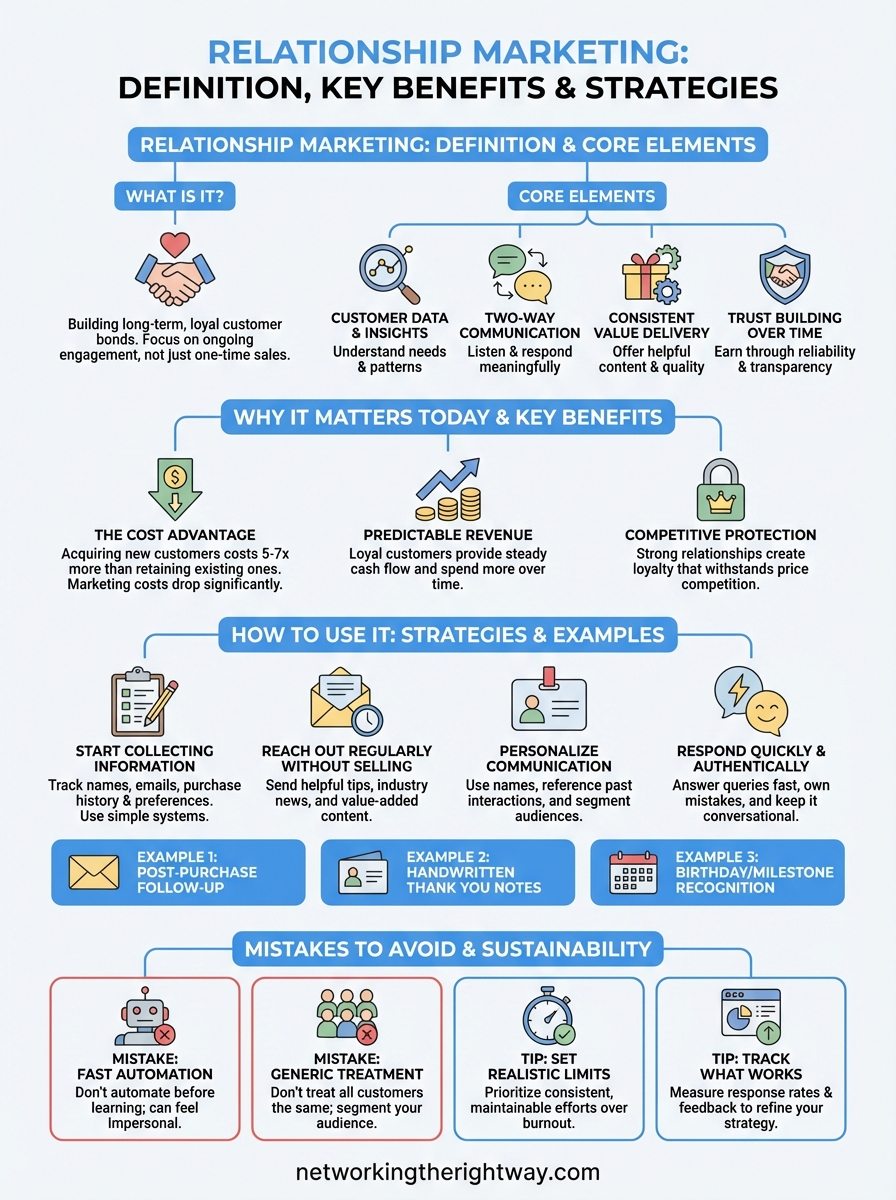
You don’t need fancy software or a huge budget to start building better customer relationships. The relationship marketing definition centers on consistent, genuine interactions that show customers you value them beyond their purchases. Start by choosing one or two simple strategies you can maintain without overwhelming yourself. Small, regular efforts beat grand gestures you can’t sustain.
Start collecting basic customer information
You need to know who your customers are before you can build relationships with them. Create a simple system to track names, email addresses, and purchase history. A basic spreadsheet works fine when you’re starting out. Record what they bought, when they bought it, and any questions they asked. This information helps you remember details about each customer without relying on your memory alone.
Ask customers for their preferences during checkout or through a quick follow up email. Find out how often they want to hear from you and what topics interest them most. You can use free tools like Google Forms to create short surveys that take less than two minutes to complete. The key is gathering information you’ll actually use, not building a database that sits untouched.
Reach out regularly without selling
Your customers should hear from you even when you’re not trying to sell something. Send helpful tips, updates, or industry news they’ll find valuable. Share content that solves problems they face, answers common questions, or saves them time and money. Email works best for most businesses because it’s direct, affordable, and familiar to your audience.
Regular contact that provides value keeps your business top of mind without making customers feel pressured or annoyed.
Set a realistic schedule you can stick to, whether that’s weekly, biweekly, or monthly. Consistency matters more than frequency. You might share a useful article one week, a customer success story the next, and a special thank you the week after. Mix up your content to keep things interesting while staying relevant to what your customers care about.
Personalize your communication when possible
Generic messages tell customers they’re just numbers to you. Use their name in emails and messages instead of writing “Dear Customer.” Reference their past purchases or interactions when you reach out. If someone bought a product three months ago, check in to see how it’s working for them. This shows you remember them and care about their experience.

Create different customer groups based on what they buy or how often they purchase. Send targeted messages to each group rather than blasting the same email to everyone. Someone who buys from you monthly needs different communication than someone who made one purchase six months ago. You don’t need complex automation for this. Even simple manual sorting makes your outreach feel more personal and relevant.
Respond quickly to questions and concerns
Speed matters when customers reach out to you. Answer emails within 24 hours and respond to social media messages the same day when possible. Quick responses show customers you’re paying attention and value their time. Even if you can’t solve their problem immediately, acknowledge their message and let them know when they can expect a solution.
Keep your responses friendly and conversational, like you’re talking to a neighbor. Avoid corporate speak and templates that sound robotic. When you make a mistake, own it quickly and fix it. Customers forgive errors when you handle them honestly and make things right. Your response to problems often matters more than the problems themselves in building lasting relationships.
Core elements of relationship marketing
Understanding the relationship marketing definition means recognizing the specific components that make it work. You can’t build lasting customer relationships by accident. Several core elements need to work together to create genuine connections that keep customers coming back. Each element plays a distinct role, and skipping any one of them weakens your entire strategy. Think of these as building blocks that stack together to form a solid foundation for long term customer loyalty.
Customer data and insights
You need accurate information about your customers to serve them well. Track purchase patterns, communication preferences, and feedback they share with you. This data shows what customers actually want instead of what you think they want. Record when they buy, how often they interact with your business, and what problems they mention. Simple notes in a spreadsheet help you remember important details about each person.
Use this information to understand customer needs before they tell you. Notice patterns like seasonal purchases or products customers buy together. When you spot these trends, you can anticipate what someone might need next. A customer who bought gardening supplies in March will probably want them again next spring. Proactive outreach based on real data shows customers you’re paying attention.
Two-way communication
Relationship marketing requires conversation, not broadcast messages. You need to listen to customer feedback and respond meaningfully. Create opportunities for customers to share their thoughts through surveys, reply buttons in emails, or social media comments. Ask questions and act on the answers you receive. When customers tell you something matters to them, acknowledge it and make changes when possible.
True relationship building happens when customers feel heard and see that their input shapes how you do business.
Encourage dialogue by making it easy for customers to reach you through multiple channels. Some people prefer email while others like phone calls or chat. Meet customers where they feel comfortable instead of forcing them into your preferred method. Response quality matters more than channel choice in building trust through communication.
Consistent value delivery
Your customers stay with you because you solve their problems reliably over time. Every interaction should add value to their lives, whether through helpful content, quality products, or excellent service. Consistency means customers know what to expect and trust you’ll deliver every single time. One great experience followed by three mediocre ones damages relationships faster than consistently decent service builds them.
Look for ways to exceed expectations without overpromising. Deliver products on time, follow up when you say you will, and fix problems quickly. Small acts of reliability compound into strong relationships. Customers remember when you do what you promised more than they remember flashy marketing campaigns.
Trust building over time
Trust develops through repeated positive experiences, not instant promises. You earn it by showing up consistently and treating customers fairly in every situation. Be honest about what you can deliver and transparent when problems occur. Customers forgive mistakes when you handle them openly and make genuine efforts to fix them. Trust breaks easily but rebuilds slowly, so protect it carefully through every decision you make.
Relationship marketing vs transactional marketing
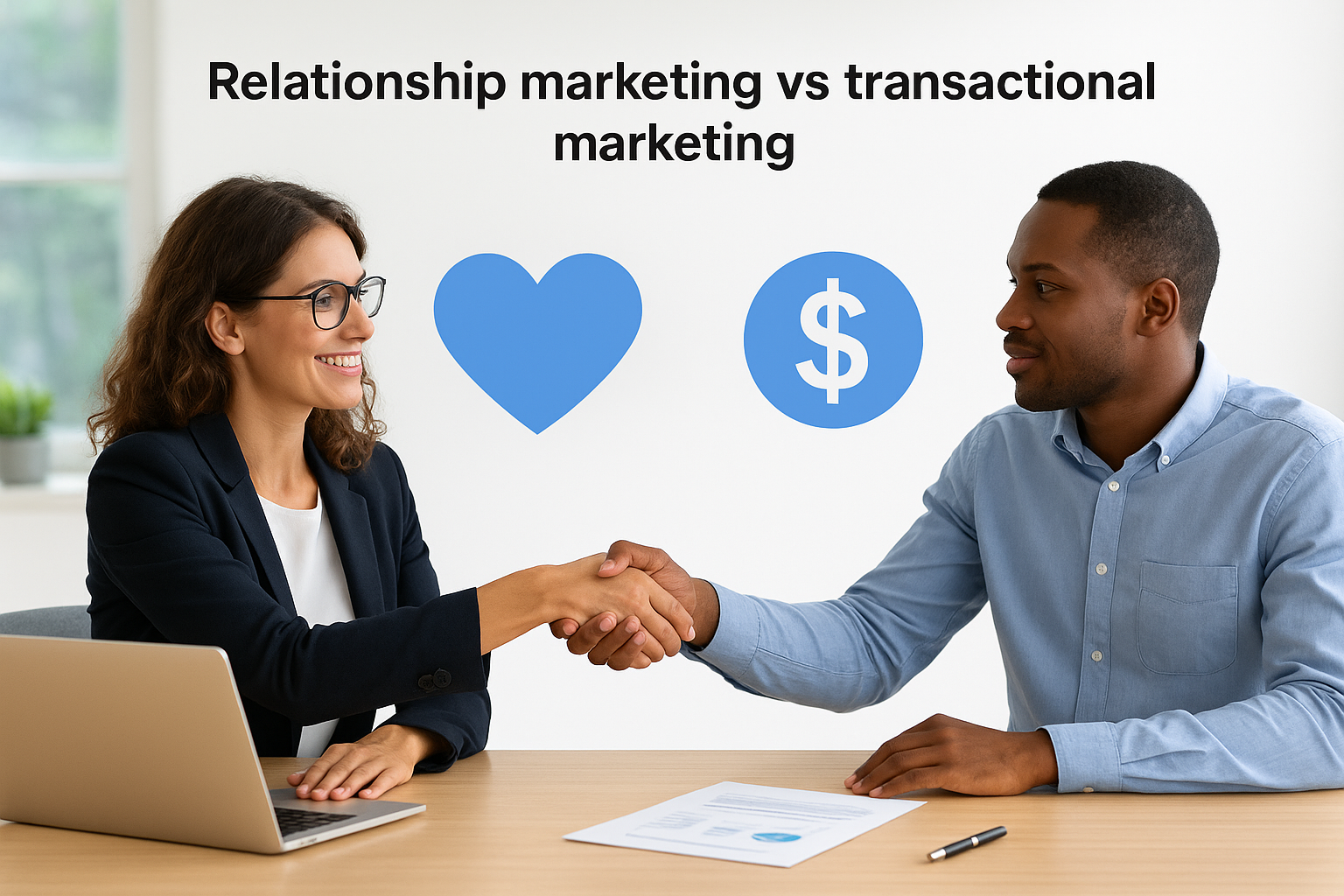
Most businesses use one of two fundamental approaches when dealing with customers. Transactional marketing focuses on making individual sales as quickly and efficiently as possible. Relationship marketing focuses on building long term connections that generate repeat business. Neither approach is inherently wrong, but they produce dramatically different results. The relationship marketing definition centers on ongoing engagement while transactional marketing treats each purchase as a separate, isolated event.
What transactional marketing prioritizes
Transactional marketing aims to maximize sales volume through one time purchases. Businesses using this approach invest heavily in advertising to attract new buyers rather than retaining existing customers. You see this strategy in action when companies run constant promotions to drive immediate sales. They measure success by conversion rates and revenue per transaction instead of customer lifetime value.
This approach works for commodity products where customers make infrequent purchases based primarily on price. Gas stations, grocery stores, and discount retailers often rely on transactional marketing because customers shop based on convenience and cost rather than brand loyalty. Your interaction with these businesses ends at the point of sale with minimal follow up or ongoing communication.
Key differences in approach
The two strategies differ fundamentally in how you allocate time, money, and effort. Relationship marketing requires consistent investment in customer communication, personalized service, and value delivery between purchases. You spend resources maintaining contact through email, social media, and customer support. Transactional marketing concentrates resources on acquisition activities like paid advertising and promotional discounts to attract buyers.
Relationship marketing treats customers as partners you grow with over time, while transactional marketing treats them as targets you convert and move on from.
Your messaging changes between these approaches too. Relationship marketing emphasizes solving customer problems and building trust through helpful content and genuine interactions. Transactional marketing pushes product features and price advantages to trigger immediate buying decisions. One strategy starts conversations while the other makes offers.
When each strategy makes sense
Transactional marketing suits businesses where customers rarely make repeat purchases or where switching costs are low. If you sell wedding dresses or once in a lifetime vacation packages, relationship marketing delivers limited return on your investment since customers won’t buy again. You benefit more from reaching new customers efficiently than nurturing existing ones.
Relationship marketing makes sense when customers need your products or services repeatedly over months or years. Subscription businesses, professional services, and retailers selling consumable goods see higher profits from loyal customers than from constantly acquiring new ones. You save money on marketing costs and generate predictable revenue streams from customers who trust you enough to buy again without hesitation.
Benefits you can expect over time
Applying the relationship marketing definition to your business delivers measurable advantages that compound over months and years. You won’t see dramatic overnight changes, but consistent effort produces steady improvements that strengthen your bottom line. These benefits work together, creating a cycle where each advantage reinforces the others. Your business becomes more profitable while requiring less constant hustle to maintain revenue.
Your marketing costs drop significantly
You spend less money attracting new customers when existing customers buy from you repeatedly. Each loyal customer represents revenue you don’t need to advertise for again. Your cost per acquisition drops because you’re not constantly replacing customers who leave after one purchase. Studies show acquiring new customers costs five to seven times more than retaining existing ones, so relationship marketing directly improves your profit margins.
Your satisfied customers also bring you referrals at zero acquisition cost. They recommend your business to friends, family, and colleagues without you asking. These referred customers often convert faster and stay longer than people who find you through paid advertising. Word of mouth marketing grows naturally from strong relationships, letting you reduce advertising spending while maintaining or growing revenue.
Revenue becomes more predictable
Repeat customers create steady cash flow you can count on each month or quarter. You know roughly when they’ll buy again based on past patterns. This predictability helps you plan inventory, staffing, and expenses more accurately than when you depend on attracting new customers constantly. Financial stability improves when you’re not wondering where next month’s sales will come from.
Loyal customers transform unpredictable sales cycles into reliable revenue streams that support sustainable business growth.
Your loyal customers also tend to spend more per transaction over time as trust builds. They try new products you offer and upgrade to premium options more readily than new buyers. This increased spending happens naturally as customers become confident in your ability to deliver value. Average order values rise without additional marketing effort.
You build lasting competitive protection
Strong customer relationships create switching costs that keep customers with you even when competitors offer lower prices. Customers stay because they value the relationship and trust you’ve built more than saving a few dollars elsewhere. This loyalty protects your market share during economic downturns and competitive pressure.
Your relationship focused approach also positions you differently in customers’ minds than businesses that only chase transactions. You become their trusted partner rather than just another vendor. This positioning makes price comparisons less relevant to their buying decisions. Customers who feel connected to your business stick around through challenges that would send transactional customers elsewhere.
Simple examples you can model
You don’t need to invent complex strategies from scratch. Successful businesses already use simple relationship marketing tactics you can copy and adapt. These examples prove the relationship marketing definition works in practice across different industries and business sizes. Pick one or two approaches that fit your business model and start implementing them this week. Small consistent actions build stronger relationships than elaborate plans you never execute.
Email follow-ups after purchase
Send a personal email three days after someone buys from you asking how the product is working for them. Don’t include sales pitches or promotional offers in this message. Simply check in and offer help if they have questions or concerns. This shows you care about their experience beyond collecting payment. Many customers respond to these emails, giving you valuable feedback and opening conversations that lead to future purchases.
Follow up again after 30 days with tips for getting more value from what they bought. Share usage ideas, maintenance advice, or complementary resources they might find helpful. A customer who bought gardening supplies might appreciate seasonal planting tips. Someone who purchased business software benefits from shortcuts and features they might have missed. These educational touches demonstrate ongoing support without feeling pushy.
Thank you notes and appreciation
Mail a handwritten thank you card to customers after their first purchase. This unexpected gesture stands out because almost nobody does it anymore. Keep the message short and genuine, thanking them for choosing your business over the alternatives available to them. Include no coupons or promotional materials, just sincere appreciation. Customers remember this personal touch and often mention it in reviews or when recommending you to others.

Create a simple customer appreciation program where you recognize loyal buyers with small unexpected perks. Send a free sample of a new product, upgrade their shipping at no charge, or give them early access to sales before the general public. These gestures cost little but make customers feel valued and special. You build emotional connections that transcend typical buyer-seller transactions.
Small acts of genuine appreciation create memorable moments that keep your business top of mind when customers need what you offer.
Birthday or milestone recognition
Send birthday greetings to customers with a modest discount or gift they can use that month. You gather birth dates through your customer data collection process. The greeting acknowledges them as people, not transaction numbers. Keep the offer simple, like 15% off their next purchase or free shipping. This personal recognition strengthens bonds and often triggers purchases customers were already considering making.
Celebrate customer anniversaries marking when they first bought from you. A simple email saying “It’s been one year since you joined us” with a thank you message shows you track and value the relationship. Include a special offer as appreciation for their continued business. These milestone acknowledgments remind customers of their positive history with you and reinforce their decision to stay loyal.
Mistakes to avoid as you get started
Many businesses fail at relationship marketing not because the strategy doesn’t work, but because they make avoidable errors during implementation. These mistakes waste time, annoy customers, and damage the relationships you’re trying to build. Understanding the relationship marketing definition isn’t enough; you need to apply it correctly from the beginning. Learning from common failures helps you build stronger customer bonds faster while avoiding the frustration of backtracking to fix problems.
Trying to automate everything too quickly
You might feel tempted to set up complex automation systems before you understand what customers actually need. Many new business owners buy expensive software and create elaborate email sequences without testing simple manual outreach first. This approach creates robotic communication that feels impersonal and generic. Customers spot automated messages instantly when they lack relevant context or personal touches.
Start with manual, personalized communication to learn what resonates with your audience. Track customer responses to different types of messages and notice patterns in what generates engagement. Once you understand what works, you can automate selectively while maintaining personal elements. Automation should enhance relationships, not replace genuine human interaction.
Treating all customers exactly the same
Blanket approaches ignore the fact that different customers have different needs and preferences. Someone who buys from you weekly needs different communication than someone who purchased once six months ago. Sending identical messages to your entire customer list wastes opportunities to connect meaningfully with specific groups. Your best customers deserve recognition for their loyalty, not treatment identical to people you’ve never interacted with before.
Generic one-size-fits-all communication tells customers you see them as numbers rather than individuals worth understanding and serving differently.
Segment your customer base into basic groups based on purchase frequency, product preferences, or engagement level. Create targeted messages for each segment that acknowledge their specific relationship with your business. Even simple grouping like active buyers, occasional buyers, and inactive buyers helps you communicate more relevantly without requiring complex systems.
Overwhelming customers with constant contact
Frequent communication doesn’t equal better relationships. You damage trust when you email customers daily with promotional offers or flood their social media feeds with constant posts. People unsubscribe or tune out businesses that demand too much attention. Respect for customer time and attention matters more than maximizing message frequency.
Ask customers how often they want to hear from you during signup or through preference surveys. Honor their choices even when it means contacting them less than you’d prefer. Quality beats quantity in relationship building; one valuable monthly message outperforms ten irrelevant weekly emails. Space your communication to give customers time to engage with each message before receiving the next one.
Keeping your strategy realistic and sustainable
The relationship marketing definition sounds simple in theory, but execution challenges trip up most businesses when they first start. You might feel excited and try implementing every tactic at once, only to burn out within weeks. Sustainable relationship building requires honest assessment of your available time, resources, and capabilities. Your strategy needs to fit your actual business situation, not some idealized version you imagine achieving someday.
Set limits you can maintain long term
You need clear boundaries around how much time you’ll invest in relationship marketing each week. Decide which activities you’ll prioritize and how often you can realistically execute them. If you can only dedicate three hours weekly to customer outreach, focus on one or two high impact tactics rather than spreading yourself thin across five different approaches. Your consistency matters more than attempting everything perfectly.
Choose communication frequencies you can sustain during busy periods as well as slow ones. Committing to weekly emails sounds great until work gets hectic and you skip three weeks straight. Monthly touchpoints you can maintain beat ambitious weekly plans you abandon. Build your strategy around your worst weeks, not your best ones, to ensure you show up consistently for customers.
Sustainable relationship marketing means choosing activities you can maintain through busy seasons and slow periods without burning out.
Start small and expand gradually
Begin with one relationship building tactic you feel confident executing well. Master that single approach before adding more complexity to your process. You might start with post purchase follow up emails and nothing else for two months. Once those emails become routine and you see positive customer responses, add a second tactic like birthday recognition to your process. Gradual expansion prevents overwhelm while building habits that stick.
Test each new tactic with a small customer segment before rolling it out broadly. Send your new email series to 20 customers and track their responses before mailing it to hundreds. This testing approach lets you refine messaging and fix problems without damaging relationships across your entire customer base. Small scale experiments cost less and teach more than big launches that flop.
Track what actually works for you
Measure simple metrics that show whether your efforts build stronger relationships. Track response rates to your outreach, repeat purchase frequency, and customer feedback you receive. Notice which messages generate replies and which ones customers ignore. Your data reveals what resonates with your specific audience rather than what marketing experts claim should work.
Review your metrics monthly to identify what deserves more effort and what you should stop doing. Activities that generate engagement and sales deserve expansion while tactics producing minimal results need adjustment or elimination. Your strategy should evolve based on real customer responses, not assumptions about what relationship marketing should look like for your business.
Final thoughts
The relationship marketing definition boils down to something simple: treat customers like people you want to build long term partnerships with, not transactions you process and forget. You create genuine connections through consistent communication, personalized service, and delivering value beyond the sale. This approach costs less than constantly chasing new customers while generating more predictable revenue from loyal buyers who trust you.
Start small with tactics you can sustain. Pick one or two strategies from this guide and commit to them for three months before expanding. Track your results and adjust based on what actually works for your specific customers. Relationship marketing isn’t complicated, but it requires patience and consistency that most businesses won’t commit to, which gives you a real advantage.
Ready to build a sustainable business that doesn’t require endless hustle? Learn a simple way to build a business online that puts relationships first and helps you create lasting customer loyalty from day one.


One Response