
Lead generation captures contact information from people ready to buy. Demand generation builds awareness and gets people interested before they’re ready to buy. Think of demand generation as planting seeds and lead generation as harvesting the crops. Both matter, but they work at different stages and serve different purposes.
This article breaks down the real differences between these two strategies. You’ll learn what each one does, when to use them, and how they work together to bring you customers. We’ll cover the metrics that actually matter and give you practical examples you can understand without a marketing degree. By the end, you’ll know which strategy fits your business right now and how to measure if it’s working.
Why lead generation vs demand generation matters
You waste money when you use the wrong strategy at the wrong time. Many people over 50 who are new to online marketing throw their budget at lead generation tactics like paid ads before anyone knows their brand exists. They get frustrated when nobody responds. Others spend months creating awareness content but never ask for the sale. Both approaches fail because timing and purpose don’t match.

The cost of mixing them up
Confusion between lead generation vs demand generation leads to real financial losses. You might spend hundreds on Facebook ads targeting people who have never heard of you, hoping they’ll immediately give you their email address. That rarely works. Or you create blog posts that build awareness but never guide readers to take the next step. Your traffic goes up, but sales stay flat because you’re not capturing that interest. Each mistake teaches you a lesson, but those lessons cost money and time you might not have to spare.
Understanding which strategy to use saves you from expensive trial and error.
Building the right foundation
Knowing the difference helps you make smarter decisions about where to spend your limited time and budget. When you start a new business, you need demand generation first to get your name out there. Once people recognize you, lead generation tactics work much better because trust already exists. This knowledge lets you plan a realistic timeline instead of expecting overnight success from the wrong approach.
How to use lead gen and demand gen together
The best approach combines both strategies in a sequence that matches how real buyers make decisions. You need demand generation to introduce yourself and build trust first. Then you deploy lead generation tactics to convert that awareness into contact information and sales conversations. Think of this like meeting someone new. You don’t ask for their phone number in the first five seconds. You start a conversation, show you’re trustworthy, and then suggest staying in touch.
Start with awareness, then capture leads
Your first step involves creating content that helps people without asking for anything in return. You write blog posts that solve problems your target audience faces. You share tips on social media that demonstrate your knowledge. This demand generation work gets your name in front of people who need what you offer. After someone has seen your content a few times and recognizes your brand, they become much more likely to respond when you ask for their email address or phone number through lead generation forms.

A simple example shows how this works. You run a business helping people organize their finances. First, you publish a blog post titled “5 Mistakes Retirees Make With Their Savings.” People find this through search engines and read it without giving you any information. They see you know what you’re talking about. Later, they notice another article from you. After three or four touches, you offer a free email course on retirement planning. Now they trust you enough to give you their email. That’s the natural flow from demand generation to lead generation.
Build trust first through helpful content, then ask for contact information.
Match your content to the stage
Different types of content serve different purposes in the lead generation vs demand generation debate. Your awareness content needs to be freely accessible and focused on education. You don’t gate it behind forms because the goal is maximum reach, not immediate conversions. Blog posts, YouTube videos, and social media updates all work well here. They introduce your brand to people who have never heard of you.
Once you have built some recognition, you shift to conversion-focused content that requires an email address or phone number. This includes downloadable guides, email courses, webinars, and free consultations. People who already know and trust your brand will exchange their information for this deeper value. The content becomes more specific and actionable at this stage.
Create a simple weekly routine
You can manage both strategies without overwhelming yourself by dedicating specific days to each. Spend Monday and Tuesday creating one piece of awareness content, like a blog post or video that solves a common problem. Use Wednesday to promote that content on social media and in relevant online communities. Thursday becomes your lead generation day, where you check your forms, follow up with new leads, and send emails to your list. Friday you analyze what worked and plan next week. This routine keeps both strategies moving forward without requiring you to understand complex marketing systems or spend money on tools you don’t need yet.
What lead generation really means
Lead generation focuses on collecting contact information from people who have shown interest in what you sell. The process involves getting a name, email address, or phone number from someone so you can start a direct conversation about your product or service. You’re not trying to educate the entire market or build long-term brand awareness. Instead, you want specific individuals to raise their hands and say they want to hear more from you right now.
How lead generation works in practice
The typical lead generation scenario starts when someone already knows they need help with something. They search online for a solution, find your website, and see an offer that interests them. You might offer a free guide, a consultation call, or a product demo. In exchange for that offer, they fill out a form giving you their contact details. That exchange marks the moment interest turns into a tangible lead you can follow up with.
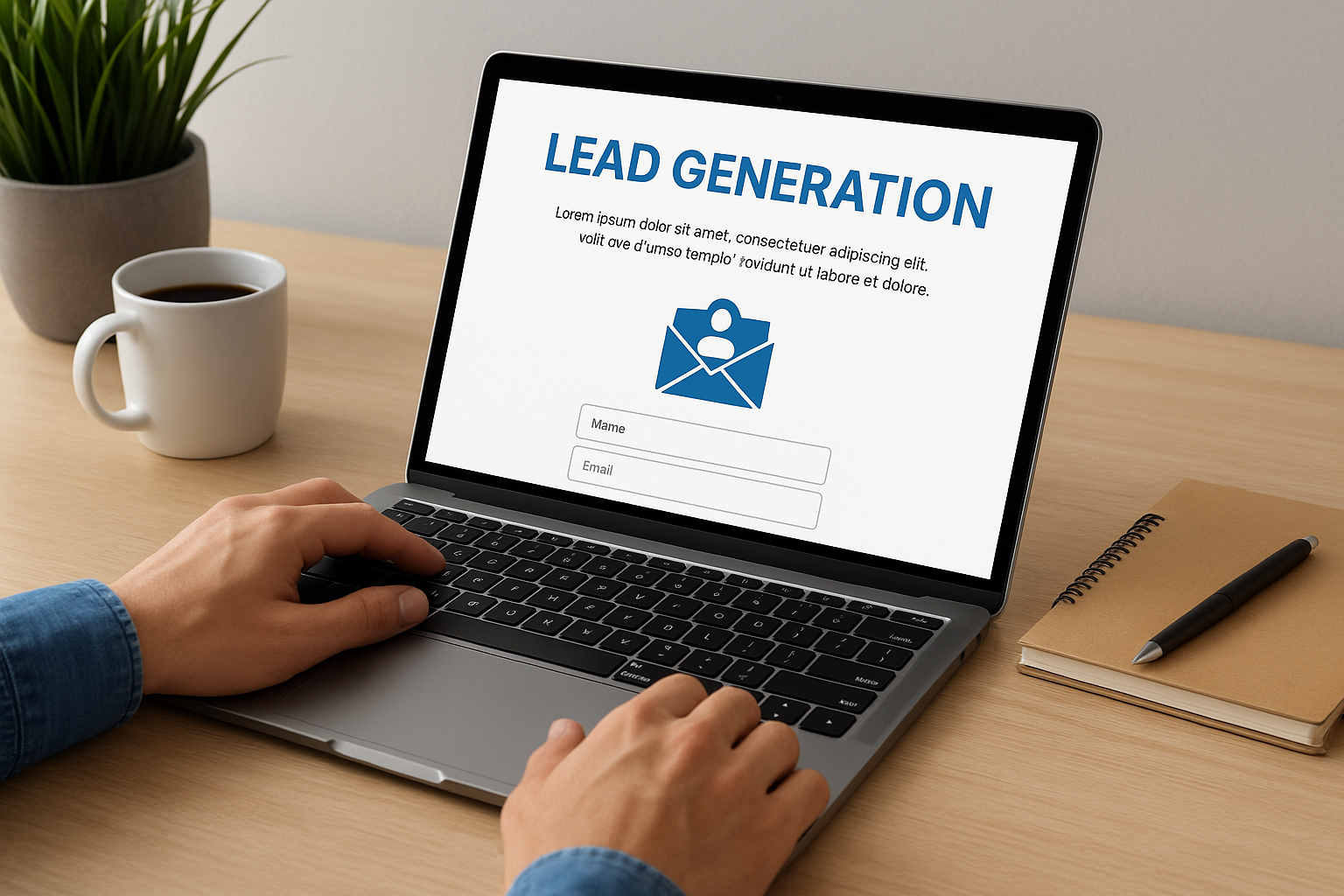
Your role in this process involves creating offers valuable enough that people willingly trade their information for them. A downloadable checklist, a video training series, or a free trial all work as lead magnets. The key factor is that the person must take action by submitting information through a form. Without that submission, you have awareness but not a lead. This distinction matters in the lead generation vs demand generation discussion because lead generation always requires that specific conversion action.
The simple mechanics of capturing leads
Once you have contact information, you start nurturing that lead toward a purchase. You send follow-up emails, make phone calls, or invite them to appointments. The lead generation process has done its job by giving you permission to start these conversations. Your sales process can now move forward because you know who is interested and how to reach them.
Lead generation turns anonymous interest into specific people you can contact directly.
Success in lead generation depends on the quality of leads more than the quantity. A hundred email addresses from people who will never buy wastes your time and money. Ten contacts from people genuinely interested in your solution creates real opportunities. You measure this through tracking how many leads convert to customers and what you spend to acquire each lead. These concrete numbers tell you if your lead generation tactics actually work for your business. Focus on attracting the right people rather than collecting the most contacts, and your conversion rates will improve naturally.
What demand generation really means
Demand generation creates awareness and interest in your business before anyone decides to buy from you. This strategy focuses on reaching people who might not even know they have a problem you can solve. You share valuable information, demonstrate your expertise, and build trust without asking for anything in return immediately. The goal involves getting your name and message in front of as many relevant people as possible so they remember you when they need what you offer.

Building awareness without asking for the sale
Your demand generation efforts start by identifying where your ideal customers spend their time online. You create content that answers their questions, solves their problems, or entertains them in ways related to your business area. Blog posts, social media updates, podcasts, and videos all serve as demand generation tools. These pieces of content remain freely accessible to anyone without requiring forms, signups, or purchases. You want maximum reach and visibility rather than immediate conversions.
The timeframe for demand generation stretches much longer than lead generation. You might create content for months or years before seeing direct sales results. Someone discovers your blog post today, reads three more articles next month, follows you on social media the month after, and finally buys from you six months later. This patient approach works particularly well in the lead generation vs demand generation comparison because it builds the foundation of trust that makes your later lead generation efforts more effective.
Demand generation plants seeds that grow into future customers over time.
Creating content that people actually want
The best demand generation content solves real problems that your audience faces right now. You avoid talking about your products or services directly. Instead, you focus on the broader challenges people encounter in their lives or businesses. A financial advisor might write about common retirement planning mistakes without mentioning their services. A home organizer might share quick tips for decluttering without asking for a consultation. This helpful approach positions you as an expert and resource rather than just another salesperson.
People share good demand generation content with friends, bookmark it for later, and return to your site multiple times. These behaviors signal that your content provides genuine value beyond promotional material. When someone has consumed your free content multiple times, they naturally become more receptive to your lead generation offers later. You have earned their attention and respect through consistent helpfulness rather than aggressive sales tactics.
Key differences at a glance
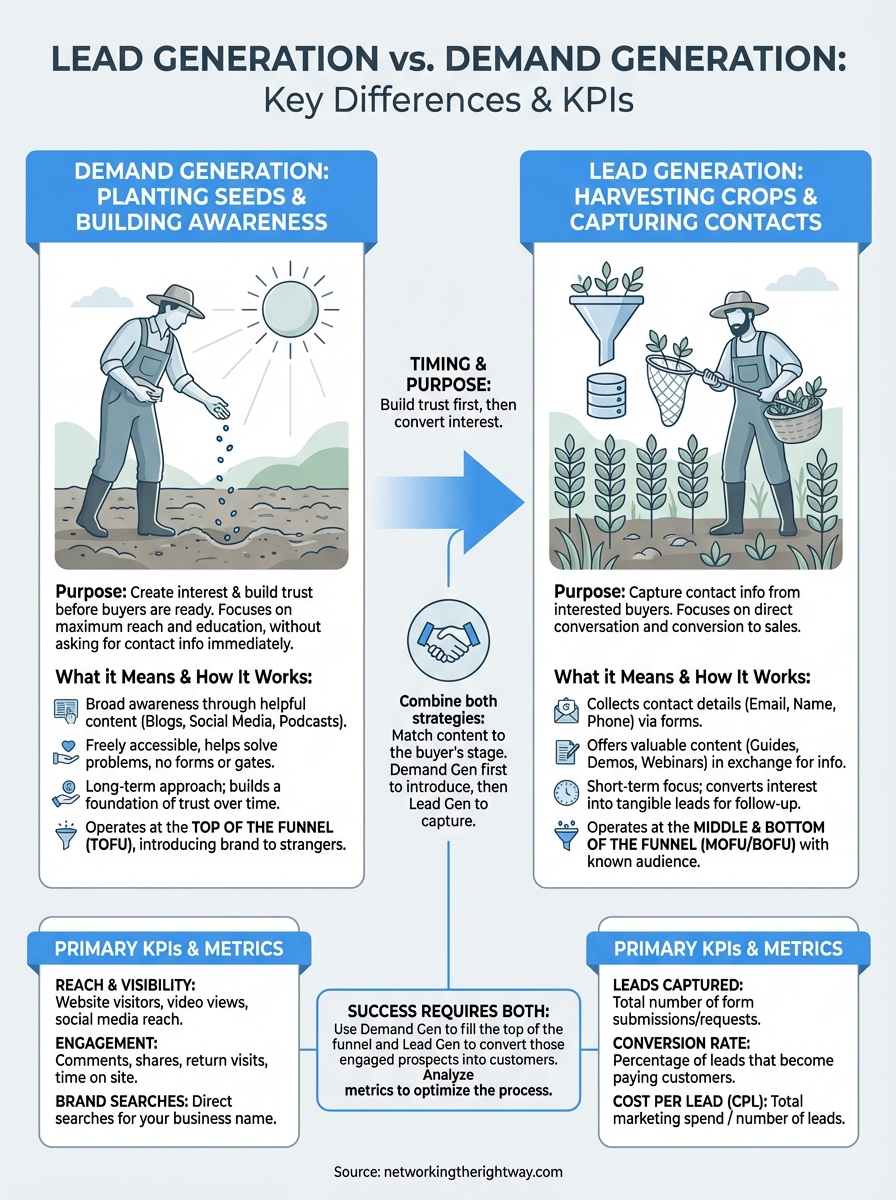
The lead generation vs demand generation debate boils down to timing and commitment. Lead generation happens when someone already knows you exist and wants more information about what you sell. Demand generation occurs earlier, when people have never heard of you or don’t yet realize they need your solution. One strategy captures ready buyers, while the other creates awareness that produces buyers months down the road.
The timing and purpose gap
Demand generation works at the top of your funnel, introducing your business to strangers who might become customers someday. You cast a wide net by sharing helpful content that anyone can access without giving you their information. Lead generation operates in the middle and bottom of your funnel with people who already recognize your brand and are considering a purchase. You target a smaller, more qualified audience that has moved past the awareness stage. The shift from one to the other happens when someone goes from “I’ve never heard of this company” to “I want to learn more about their specific offer.”
What you ask from your audience
Demand generation asks for attention and time. You want people to read your blog post, watch your video, or follow your social media account. Success means they remember your name and trust your expertise. Lead generation asks for contact information in exchange for something valuable like a consultation, guide, or demo. Success means converting anonymous readers into identified prospects you can follow up with directly.
The key difference is whether you’re asking people to pay attention or to take action.
Your demand generation content remains completely free and accessible to build the largest possible audience. Your lead generation content sits behind forms and targets people who already trust you enough to exchange their information for your offer. This fundamental difference in what you ask determines which metrics matter for measuring success.
KPIs and simple metrics to track
You need to measure different things for each strategy because lead generation vs demand generation serve different purposes. Tracking the right numbers tells you if your efforts actually work or if you waste time on activities that produce no results. Many people over 50 avoid metrics because they seem complicated, but the basic measurements that matter most require nothing more than simple counting and a spreadsheet. You don’t need expensive software or technical knowledge to know if your marketing works.
Demand generation metrics you can track today
Your demand generation efforts focus on reach and engagement rather than immediate sales. Start by counting how many people see your content each week. This includes website visitors, video views, and social media reach. You want this number to grow steadily over time as more people discover your brand. Track how many articles you publish each month and how many people read them. These basic visibility metrics tell you if your awareness efforts expand your audience or just spin your wheels.
Engagement matters more than raw numbers because it shows real interest rather than accidental clicks. Count how many people comment on your posts, share your content, or return to your site multiple times. Look for patterns in which topics generate the most discussion and create more content around those subjects. Brand searches represent another valuable metric. Track how many people search for your business name directly on search engines each month. Growing brand searches prove your demand generation work makes your name memorable enough that people actively look for you later.
Measure awareness through reach and engagement, not sales, when evaluating demand generation.
Lead generation metrics that actually matter
Lead generation success depends on quality and cost more than volume. Count how many leads you capture each week through forms, consultations, or contact requests. Then calculate what percentage of those leads turn into paying customers. This conversion rate tells you if you attract serious buyers or time wasters. A high conversion rate means your lead generation targets the right people. A low rate suggests you need to change your offers or targeting.
Cost per lead matters just as much as quantity. Divide your total marketing spend by the number of leads you generate to find this number. If you spend $100 on ads and get 10 leads, each lead costs you $10. Track this monthly to see if your efficiency improves or declines. Compare your cost per lead against your average customer value to ensure you can afford your acquisition strategy. Spending $50 to acquire a customer who pays you $200 works fine. Spending $200 to acquire a $50 customer puts you out of business.
How to start tracking without expensive tools
You can track everything mentioned above using free spreadsheets and the basic analytics that come with your website and social media accounts. Create a simple spreadsheet with columns for date, website visitors, leads captured, and customers acquired. Enter these numbers weekly from your website dashboard and email system. This manual tracking takes ten minutes each week and gives you all the insights you need to make smart decisions about where to focus your efforts going forward.
Bringing it all together
Understanding lead generation vs demand generation helps you spend your time and money wisely. You start with demand generation to introduce yourself and build trust through helpful content. Once people recognize your brand, you shift to lead generation tactics that capture contact information and turn awareness into sales conversations. Both strategies work together as part of a complete marketing system rather than competing approaches.
Your success depends on matching the right strategy to where your business stands today. Track simple metrics like website visitors, leads captured, and conversion rates to know what works. Start with one awareness piece each week and one lead capture offer each month. This balanced approach builds your audience while converting ready buyers at the same time.
Ready to put this into action? Learn how to build a simple business online with step-by-step guidance designed for people starting fresh.