
You spend time and money bringing new customers through the door. They sign up. They buy. Then they vanish. No goodbye. No explanation. Just gone. Losing customers after working so hard to earn their trust hurts. It also costs you revenue and makes growing your business feel like running on a treadmill.
This article walks you through 12 customer retention strategies that work without requiring fancy technology or a marketing degree. Each strategy includes practical examples and simple tools you can start using right away. You will learn how to keep customers engaged, build genuine relationships, spot problems early, and create systems that keep people coming back. These methods focus on the basics that matter most: treating customers well, staying in touch, and making it easy for them to stick around.
1. Network the right way with your customers
Building real connections with your customers forms the foundation of every lasting business relationship. Networking with customers goes beyond sending automated messages or posting on social media. It means creating genuine touchpoints where you listen, respond, and show you care about their success. This approach turns one-time buyers into loyal advocates who stick with you through market changes and competitor offers.
Why networking drives retention
People buy from businesses they trust and remember. When you network consistently with your customers, you stay present in their minds and strengthen the emotional connection they have with your brand. Regular, meaningful interactions help you spot problems early, understand changing needs, and demonstrate that you value their business beyond the initial sale. Customers who feel known and appreciated rarely leave for a competitor offering a slightly lower price.
Simple ways to network with customers
You do not need fancy tactics to network effectively. Send personal thank you notes after purchases or milestones. Comment genuinely on their social media posts when they mention your product. Share helpful resources that relate to their goals, even when you are not selling anything. Schedule brief calls just to check in and ask how things are going. Each small gesture builds trust and keeps your relationship growing stronger over time.
Authentic networking creates loyalty that discounts and promotions never can.
Tools that make online networking easier
Email platforms like your inbox let you set reminders to follow up with customers at regular intervals. Simple spreadsheets help you track customer conversations, birthdays, and important dates. Social media profiles on platforms where your customers spend time give you natural spaces to interact and share value without hard selling.
Example networking touchpoints
Reach out when customers hit usage milestones or anniversaries with your business. Send birthday greetings or congratulations when they share professional wins online. Ask for their advice or input on new features or offerings. Share articles or tips that solve problems they mentioned in previous conversations, showing you listen and remember what matters to them.
2. Create a simple onboarding experience
Your onboarding process sets the tone for your entire customer relationship. When customers feel confused or overwhelmed during their first days with your product or service, they start looking for alternatives. A clear, supportive onboarding experience helps customers get quick wins, builds confidence in their decision to buy from you, and reduces early churn. Strong customer retention strategies always include a welcoming, structured start.
What a good onboarding journey looks like
A successful onboarding journey walks customers through their first important actions without making them feel lost. You guide them to one meaningful result in the first session instead of overwhelming them with every feature your product offers. Clear instructions, simple next steps, and encouragement along the way make customers feel supported rather than abandoned after purchase.
Customers who achieve early wins during onboarding stay longer and spend more.
Steps to map your onboarding process
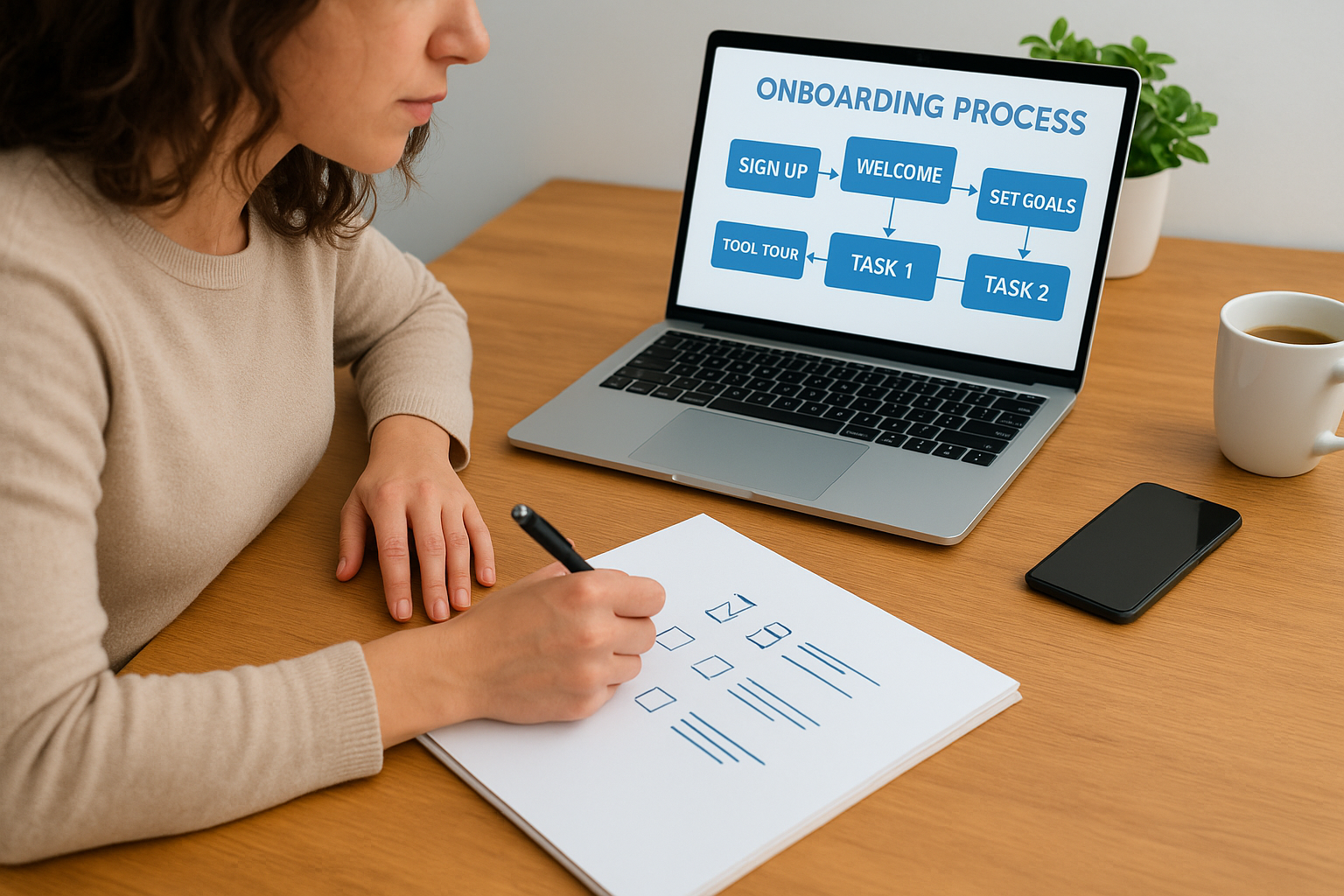
Start by identifying the single most important action a customer must complete to get value from what you sell. Write down every step they need to take to reach that goal. Remove unnecessary steps that create friction or confusion. Create a welcome email sequence that delivers instructions at the right pace, typically spreading key information across three to five messages during the first week.
Tools for checklists and welcome emails
Your email service provider handles automated welcome sequences that trigger when someone signs up. Free or low cost options like your current email software work fine for basic automation. Simple checklists created in documents or spreadsheets help you track what each customer needs to complete during onboarding.
Measure onboarding success
Track the percentage of customers who complete your core onboarding steps within the first week. Monitor how many customers use your product actively after finishing onboarding compared to those who do not complete the process. These numbers tell you where customers get stuck and what needs improvement.
3. Set a regular check in rhythm
Customers forget about businesses that go silent after the sale. Staying in touch regularly keeps your relationship warm and positions you as a trusted partner rather than a forgotten vendor. When you establish a contact rhythm, you create predictable touchpoints that feel natural instead of pushy. This consistency builds familiarity and trust while giving you opportunities to solve problems before customers decide to leave.
Why a contact schedule matters
Random, sporadic outreach feels desperate and makes customers uncomfortable. Planned contact schedules demonstrate professionalism and respect for your customers’ time. You can prepare meaningful updates and helpful information to share during each touchpoint. Regular contact also helps you notice changes in customer behavior or satisfaction levels early enough to take action.
Consistent touchpoints transform transactions into relationships that last.
How to build a simple contact calendar
List all the natural moments when reaching out makes sense, such as after purchase, at 30 days, at 90 days, and before renewal dates. Mark these dates in a basic spreadsheet or calendar for each customer. Include what you will say or send during each contact. Start with quarterly check ins if monthly feels too frequent for your business type.
Example check in scripts and prompts
Ask customers how they are using your product and what results they see. Share a quick tip or update that adds value without requiring a response. Inquire if anything confuses them or if they need support. These simple prompts encourage dialogue without creating pressure to buy more.
Tools for reminders and follow ups
Your calendar app sends alerts when check in dates arrive. Spreadsheets track customer contact history and next scheduled outreach dates. Email drafts saved as templates speed up personalized messages when contact dates approach.
4. Personalize how you communicate
Generic messages get ignored. Personalized communication shows customers you see them as individuals rather than account numbers on a spreadsheet. When you tailor your messages to match customer interests, behaviors, and needs, your emails get opened, your calls get answered, and your suggestions get acted upon. Smart customer retention strategies use personalization to build connections that feel genuine instead of automated.
What personalization really means
Personalization starts with using customer names and referencing specific details about their situation. You mention the product they purchased, the problem they wanted to solve, or the goal they shared with you during signup. Real personalization avoids fake familiarity and focuses on sharing relevant information that matches what each customer cares about right now.
Personal touches transform standard messages into conversations customers value.
Easy ways to segment your customers
Group customers by purchase history so you send relevant product tips to people who own specific items. Separate customers based on usage frequency to identify active users versus those who need encouragement. Industry or business type creates natural segments when you serve different markets with distinct needs.
Personalize messages without feeling creepy
Reference information customers shared directly with you rather than details you gathered through tracking. Keep personalization subtle by focusing on helpful recommendations instead of proving how much data you collected. Ask permission before sending targeted content based on behavior patterns.
Tools that support basic personalization
Your email software likely includes merge fields that insert customer names and purchase details automatically. Spreadsheets help you tag customers with segments so you send appropriate messages to each group. Contact management features in most email platforms let you organize customers by shared characteristics without expensive software.
5. Make support fast and human
Poor customer support drives customers away faster than almost any other business mistake. When customers reach out for help, they want quick responses and real understanding from someone who cares about solving their problem. Support experiences shape how customers feel about your entire business, making support quality a cornerstone of effective customer retention strategies. Fast, empathetic support turns frustrated customers into loyal advocates.
Why support quality affects retention
Customers judge your business by how you handle problems more than how you handle sales. Slow or robotic support responses make customers feel unvalued and spark searches for alternatives. When you deliver fast, caring support, customers trust you will stand behind your product when issues arise. This trust keeps them renewing and recommending your business to others.
Support quality reveals whether you value customers beyond their initial purchase.
Set clear response and resolution times
Commit to responding within specific timeframes based on issue urgency and communicate these standards clearly. Aim for same day responses to all customer messages, even if your full solution takes longer. Tell customers when they can expect resolution so they know you are working on their problem instead of wondering if you forgot them.

Use scripts while sounding human
Scripts help you cover essential troubleshooting steps without forgetting important details. Customize each scripted response with personal touches that reference the customer’s specific situation. Read your messages aloud before sending to catch awkward phrasing that sounds robotic rather than helpful.
Simple tools to manage support requests
Your email inbox handles support requests when organized with folders and labels for different issue types. Free shared inbox tools let small teams track who handles which customer question. Saved email templates speed up common responses while leaving room for personalization that makes each customer feel heard.
6. Ask for feedback and act on it
Your customers hold the answers to improving your business, but only when you ask the right questions and use what they tell you. Customer feedback reveals what works, what frustrates people, and what keeps them loyal or drives them to competitors. Collecting opinions means nothing if you let responses gather dust in your inbox. Strong customer retention strategies turn feedback into visible improvements that show customers you listen and value their input.
Ask for feedback in plain language
You get better responses when you ask specific, simple questions instead of vague requests for opinions. Focus on one topic per survey so customers can answer quickly without feeling overwhelmed. Avoid industry jargon or complicated rating scales that confuse people. Ask direct questions like “What confused you most during setup?” or “What would make this product more useful for you?”
Specific questions deliver actionable answers you can implement immediately.
Turn feedback into quick improvements
Sort feedback into quick fixes you can handle right away and larger changes requiring more time. Tackle the easy improvements first to build momentum and show customers you take action. Address the most common complaints before pursuing perfect solutions to rare problems. Document what you changed so you can share updates with the customers who suggested improvements.
Close the loop so customers feel heard
Inform customers when you implement their suggestions through email updates or announcements. Thank people individually for valuable feedback that led to specific changes. Explain why you cannot act on certain suggestions when necessary so customers understand your decision making process.
Tools for surveys and feedback forms
Your email software sends simple survey questions after purchases or support interactions. Free form builders create basic feedback surveys you embed on your website or send through email. Spreadsheets organize responses and help you spot patterns across multiple customer comments.
7. Start a basic loyalty or rewards program
Rewarding customers for staying with your business creates a concrete reason to return instead of shopping elsewhere. Loyalty programs do not require complicated technology or massive budgets to work effectively. Simple rewards that recognize repeat purchases or milestones strengthen customer relationships and increase lifetime value. Among customer retention strategies, loyalty programs directly encourage the behavior you want by making customers feel appreciated for their continued business.
Choose rewards your customers value
You waste resources offering rewards that customers ignore or never redeem. Ask your customers directly what types of rewards would excite them most rather than guessing what they want. Match rewards to your business model and margins so you can deliver them consistently without creating financial pressure. Consider offering discounts, free products after certain purchase thresholds, exclusive early access to new offerings, or special recognition that makes loyal customers feel valued.
Rewards work best when customers actually want what you offer.
Keep your loyalty program simple
Complex point systems with confusing redemption rules frustrate customers and reduce participation. You get better results when customers understand immediately how to earn and use rewards. Create straightforward rules like “buy five, get one free” or “earn 10% off your next purchase after spending $100.” Communicate program details clearly in plain language that anyone can understand without studying fine print.
Examples of low tech loyalty ideas
Track purchases with stamp cards where customers collect stamps toward free items. Offer tiered discounts based on total spending over time, such as 5% off after $500 spent, 10% off after $1000. Create a VIP email list for repeat customers who receive exclusive offers before the general public. Give loyal customers first access to limited inventory or new products as a privilege of their continued support.
Tools to track points and rewards
Basic spreadsheets track customer purchases and reward balances effectively for small businesses. Your point of sale system may include built-in loyalty features you can activate without additional software. Paper punch cards work perfectly for simple programs requiring zero technology investment.
8. Educate customers with helpful content
Customers who understand how to use your product or service get better results and stick around longer. Educational content helps customers solve problems, discover new ways to benefit from what you offer, and feel confident in their ability to succeed. When you invest in teaching customers rather than just selling to them, you build expertise that makes switching to competitors feel risky and unnecessary. Effective customer retention strategies always include ongoing education that deepens customer knowledge and engagement over time.

Why education reduces churn
Confused customers leave because they struggle to see value in what they purchased from you. When customers learn how to apply your product to their specific situations, they experience wins that justify their investment. Well-educated customers encounter fewer frustrating roadblocks and feel empowered to overcome obstacles without abandoning their purchase. Education transforms buyers into confident users who appreciate the full scope of what you provide.
Customers who understand your product rarely leave for something they would need to learn from scratch.
Plan a basic customer education path
Start by identifying the top three problems customers try to solve with your product. Create content that addresses each problem with clear, step-by-step guidance. Organize content by skill level so beginners access foundational material while experienced customers find advanced techniques. Build your education path gradually by adding one new piece monthly instead of overwhelming yourself creating everything at once.
Types of content that work well
Short video tutorials demonstrate processes visually for customers who learn by watching. Written guides with screenshots walk through tasks customers can reference while working. Email tips deliver small, digestible lessons that fit into busy schedules. FAQ documents answer common questions customers search for when stuck.
Tools to create and share content
Your smartphone camera records quick how-to videos you upload to platforms customers already use. Free document software creates guides you share as PDFs or web pages. Email platforms distribute educational content directly to customer inboxes on schedules you control.
9. Build a small but active customer community
Creating a space where your customers connect with each other transforms isolated buyers into engaged members of something larger. Customer communities provide peer support that reduces your workload while building loyalty that price competition cannot break. You do not need thousands of members to create value. A small, engaged group where people actively help each other and share experiences delivers more retention benefits than a large, silent audience. Communities that thrive become natural extensions of your customer retention strategies by creating social ties that make leaving feel like abandoning friends.
Benefits of a small customer community
Active communities give customers someone to ask when they hit roadblocks outside your support hours. Members share creative uses for your product that you never imagined, giving other customers ideas that increase product value. Social connections between community members create emotional investment in staying because leaving means losing access to helpful relationships and accumulated knowledge.
Communities turn individual customer relationships into a network that reinforces itself.
Choose the right place for your group
Pick platforms your customers already use daily instead of forcing them to learn new software. Facebook groups work well for older demographics comfortable with social media. Email groups or simple forums suit customers who prefer less public interaction. Start with one platform and expand only after proving your community concept works.
Simple ways to start conversations
Post questions that invite customers to share their experiences or solutions to common challenges. Highlight customer wins and ask them to explain how they achieved results. Create weekly themes that give members natural topics to discuss without forcing participation.
Tools to host and moderate communities
Free Facebook group features include moderation tools and member management without technical setup. Email discussion lists through your current provider let customers reply to everyone with zero additional software. Simple online forums require basic hosting but offer full control over your community space.
10. Use email to stay top of mind
Email gives you direct access to customers without depending on social media algorithms or paid advertising. When you build an engaged email list and send valuable messages consistently, you stay present in customer minds even when they are not actively using your product. Regular email contact creates multiple touchpoints that remind customers why they chose you, share helpful information, and strengthen relationships over time. Email remains one of the most cost-effective customer retention strategies because you own the channel and control the message.
Build an email list you own
Start collecting email addresses from every customer interaction, including purchases, support requests, and website visits. Create simple signup forms that explain what customers receive by joining your list rather than vague promises about updates. Never buy email lists or add people without permission because unwanted messages damage your reputation and get ignored.
Your email list becomes more valuable as relationships deepen over time.
Plan a simple email content calendar
Map out one month of emails showing what you will send and when before scheduling anything. Mix educational content, product tips, customer stories, and occasional promotions in ratios that prioritize value over selling. Send emails consistently on the same day and time each week so customers expect and watch for your messages.
Examples of high value retention emails
Share quick wins customers can achieve this week using your product. Highlight underused features that solve common problems customers mention. Feature customer success stories that inspire others and demonstrate real results your product enables.
Email tools that are friendly to beginners
Your current email service provider likely includes basic automation and scheduling features you can start using immediately. Free tiers from major platforms handle small lists effectively while you learn email marketing fundamentals.
11. Spot churn warning signs early
Waiting until customers cancel to address problems means you already lost them. Early warning signs give you time to intervene before customers decide to leave. When you monitor specific behaviors that predict churn, you can reach out proactively to solve issues and demonstrate you care about customer success. Catching problems early separates effective customer retention strategies from reactive approaches that scramble to save relationships after damage occurs.
Common early signs of customer churn
Decreased login frequency signals customers stop finding value in what you offer. When active users suddenly reduce their usage or go silent, something changed in their situation or satisfaction level. Ignored emails that previously got opened show declining interest or attention shifts to other priorities. Support tickets that mention competitors or pricing indicate customers actively explore alternatives.

Behavior changes reveal problems customers might never mention directly.
How to build a basic health score
Assign point values to positive behaviors like logins, purchases, and feature usage that healthy customers exhibit regularly. Subtract points for negative signals such as support complaints, declined payments, or extended periods without activity. Set threshold scores that trigger alerts when customers drop into at risk territory requiring attention.
Save at risk customers with outreach
Contact customers personally when their health scores drop below your warning threshold. Ask specific questions about what changed and whether you can help solve any problems they face. Offer targeted assistance like training sessions, temporary discounts, or customized solutions that address their specific concerns.
Tools that highlight low engagement
Your analytics platform tracks login frequency and feature usage patterns across your customer base. Spreadsheets calculate basic health scores when you update customer activity data weekly. Email software shows which customers stopped opening messages compared to previous engagement levels.
12. Track a few key retention metrics
You cannot improve what you do not measure. Tracking basic retention metrics shows whether your customer retention strategies work or need adjustment. Numbers reveal patterns your gut feelings miss and prove which tactics deliver results worth repeating. Start with three to five core metrics that connect directly to customer behavior and business outcomes rather than drowning in data that creates confusion without clarity.
Key retention metrics to track
Monitor your customer retention rate by calculating the percentage of customers who stay with you over specific periods like monthly or quarterly. Track repeat purchase rate to see how many customers buy from you multiple times. Watch your churn rate because it shows the percentage of customers who leave during each measurement period. Count active users regularly to spot engagement drops before customers disappear completely.
Simple metrics tracked consistently beat complex dashboards reviewed rarely.
How often to review your numbers
Check your core retention metrics weekly to catch problems while you can still fix them. Monthly reviews give you enough data to spot trends without reacting to normal fluctuations. Schedule quarterly deep analysis sessions where you compare metrics across longer timeframes and adjust your retention strategies based on what the numbers reveal.
Link metrics to daily actions
Connect each metric to specific activities your team controls, such as response times affecting churn rates or email engagement predicting repeat purchases. When metrics decline, identify the exact behaviors to change rather than staring at numbers without taking action.
Simple spreadsheets and tools to use
Basic spreadsheets track customer counts, purchase dates, and activity levels without requiring expensive software. Your payment processor shows revenue and repeat customer data you can export monthly. Free analytics tools built into your website or app measure login frequency and feature usage patterns.
Bringing your retention plan together
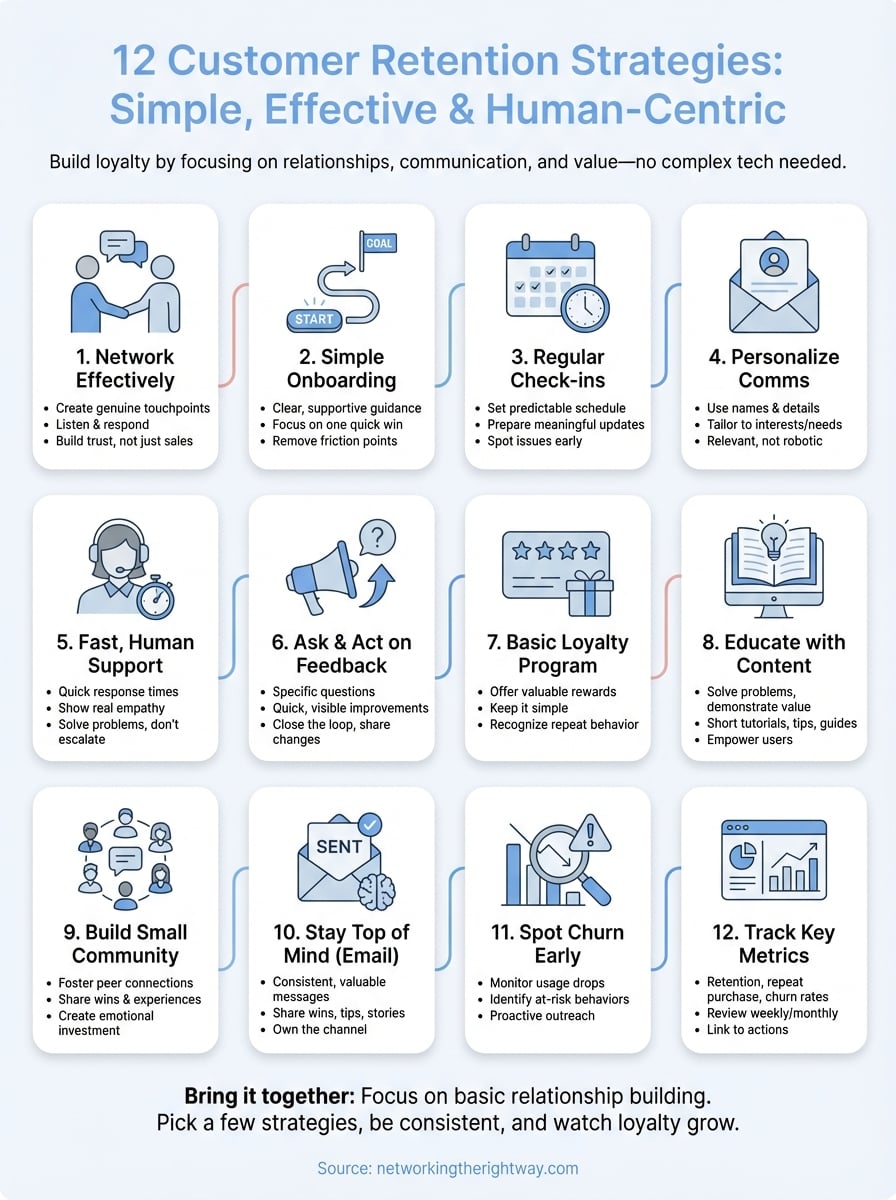
These twelve customer retention strategies work because they focus on basic relationship building rather than complicated technology or marketing tactics. You do not need to implement everything at once. Pick two or three strategies that match where your customers struggle most and start there. Add more approaches as you build confidence and see results from your initial efforts.
Track your progress using the simple metrics covered in strategy twelve so you know what works. The businesses that succeed with retention treat customers like valued relationships instead of transaction numbers on a spreadsheet. Your willingness to listen, respond quickly, and stay in touch consistently matters more than fancy software or large budgets.
Building genuine connections forms the core of lasting customer relationships. When you network the right way with your customers, you create loyalty that survives price competition and market changes. Start small, stay consistent, and watch your retention numbers improve month after month.