
You watch younger people make money online and wonder if it’s too late for you. Maybe you tried something before and it felt too complicated. The truth is affiliate marketing for seniors isn’t just possible—it’s one of the most practical ways to earn extra income after 50. You don’t need advanced tech skills or a big budget to get started.
Affiliate marketing works because you recommend products you already know about. When someone buys through your recommendation, you earn a commission. No inventory, no shipping, no customer service headaches. You focus on sharing helpful information with people who need it, and companies pay you for connecting them with customers.
This guide shows you exactly how to start. You’ll learn what affiliate marketing really means without the jargon. Then we’ll walk through four straightforward steps: picking a topic you enjoy, joining programs that accept beginners, setting up a simple online presence, and making your first sale. Each step includes specific actions you can take today.
What affiliate marketing is in plain English
Affiliate marketing means you recommend products or services online and earn money when someone buys through your unique link. Think of it like being a trusted friend who suggests a great restaurant to someone. The restaurant appreciates your recommendation and gives you a thank you gift for sending them a customer. You’re simply connecting people with solutions they need.

The three parties involved
Every affiliate marketing transaction includes three key players. First, there’s the company selling a product (the merchant). Second, there’s you (the affiliate) sharing information about that product. Third, there’s the customer who buys after reading your recommendation. The merchant tracks sales through your unique affiliate link, which contains a special code that identifies you.
Affiliate marketing for seniors works well because you already have years of experience and knowledge that others value.
Companies want to work with you because they only pay when you deliver results. You don’t handle inventory, shipping, or customer complaints. Your job is to create helpful content that educates people and includes your affiliate links naturally. When someone clicks your link and makes a purchase, the company’s system automatically records the sale and credits your account.
How you get paid
Most programs pay through three common methods. Pay-per-sale gives you a percentage (usually 5% to 50%) of each purchase price. Pay-per-lead pays a fixed amount when someone signs up for a trial or submits their contact information. Pay-per-click pays small amounts for each person who clicks your link, regardless of whether they buy. Programs typically send payments monthly through direct deposit or PayPal once you reach a minimum threshold, often $50 to $100.
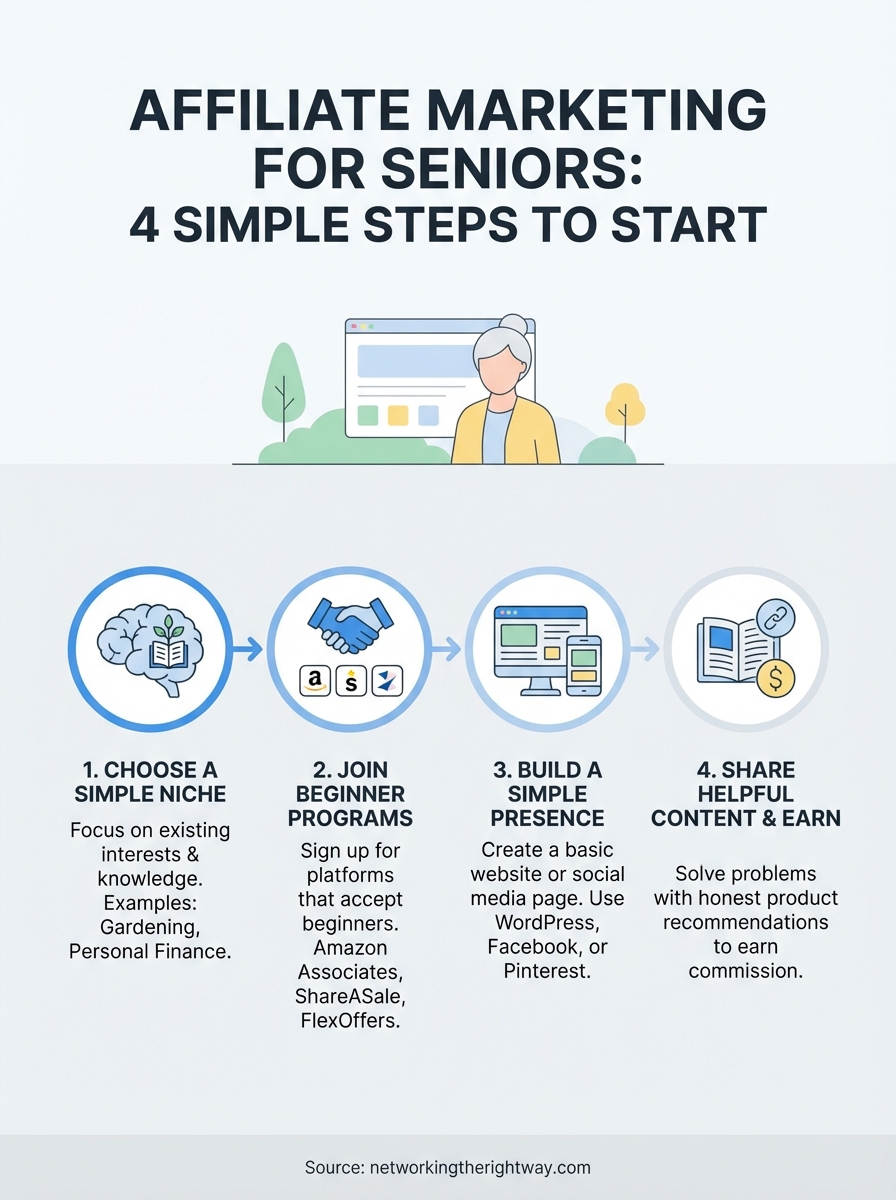
Step 1. Choose a simple niche you care about
Your niche determines everything else in affiliate marketing. A niche is simply a specific topic you’ll focus on when creating content and recommending products. Choosing the right niche makes affiliate marketing for seniors easier because you work with subjects you already understand instead of forcing yourself to learn something completely new. You want a topic narrow enough to attract a specific audience but broad enough to offer multiple products.
Start with your existing knowledge
Think about topics where people already ask you for advice. Maybe you know about gardening techniques, managing arthritis pain, or planning budget vacations. Your decades of experience give you valuable insights that beginners desperately need. Write down five topics where you could talk for an hour without preparation.
The best niches combine your personal interests with problems that people actively search for solutions to solve.
Look at your list and cross out anything you’d get bored discussing within a month. Affiliate marketing requires consistent content creation, so pick something that genuinely interests you. For example, if you’ve refinanced your mortgage three times and helped friends navigate the process, personal finance for retirees could be your niche. If you’ve tried twenty different ergonomic products for back pain, that’s another solid option.
Test if your niche has income potential
Check if companies sell products related to your topic by searching Amazon for relevant items. If you find multiple products with good reviews and various price points, that signals a healthy market. Next, search your niche topic plus "affiliate program" to see if merchants offer partnerships. For instance, "gardening tools affiliate program" reveals dozens of companies eager to work with affiliates.

Verify that people actually search for information in your niche. Type your topic into Google and note the suggested searches that appear. If Google suggests multiple related questions, people are actively looking for answers. You can also check specific questions on forums or Facebook groups where your target audience gathers. Strong niches have both available products to promote and active communities seeking help with related problems.
Step 2. Join beginner friendly affiliate programs
Your next move is signing up for programs that accept newcomers without requiring advanced marketing experience or an established website. Many seniors worry about rejection, but several major platforms welcome beginners and provide training resources to help you succeed. You want programs with fair commission rates, reliable payment systems, and products that match your chosen niche.
Start with these three programs
Amazon Associates represents the easiest entry point for affiliate marketing for seniors. You can promote millions of products across every category imaginable, and most people already trust Amazon. The commission rates range from 1% to 10% depending on product categories, and you earn commissions on the entire shopping cart, not just the item you linked to. Apply directly through Amazon’s affiliate homepage and complete their simple application form.

FlexOffers manages relationships with thousands of merchants under one platform. You submit one application to access multiple programs instead of applying to each company separately. Their interface shows which programs accept beginners and which require established traffic. Commission Junction (CJ Affiliate) operates similarly and includes many household brand names that pay competitive rates.
ShareASale works particularly well for physical products and services. They accept new affiliates readily and provide detailed tutorials on using their platform. You’ll find programs for everything from health supplements to home improvement tools, making it easy to match offers with your niche.
How to apply without getting rejected
Fill out applications honestly and completely. Programs ask about your promotional methods (blog, social media, email), so explain specifically how you plan to share affiliate links. Mention that you’re creating helpful content for people in your niche rather than using paid advertising or spam tactics.
Most programs approve applications within 24 to 72 hours if you demonstrate a genuine plan to create useful content.
Wait until you have at least five pieces of content published before applying to programs with stricter requirements. This shows you’re serious about building an audience. Keep your initial applications simple by choosing three programs maximum, learn their systems thoroughly, and expand to other programs after making your first few sales.
Step 3. Build a simple website or social page
You need somewhere to publish content and share your affiliate links. This doesn’t require technical expertise or expensive tools. Your platform serves as home base where people find your recommendations and click through to products you’ve chosen. Most seniors succeed faster by starting with one platform and expanding later rather than spreading efforts across multiple channels before gaining traction.
Pick your platform based on comfort level
Consider how comfortable you feel with technology. A website gives you complete control and looks more professional, but requires learning a new system. Social media pages feel more familiar if you already use Facebook or Pinterest, and you can start sharing immediately. Both approaches work for affiliate marketing for seniors, so choose based on your current skill level rather than what seems most impressive.

WordPress.org powers over 40% of all websites and offers thousands of free themes designed specifically for bloggers. You’ll need web hosting (around $5 monthly) and a domain name (around $15 yearly). Bluehost, HostGator, and SiteGround all provide one-click WordPress installation that sets up your site automatically. Alternatively, Wix and Squarespace offer drag-and-drop builders where you simply click elements and move them around your page without touching any code.
Starting with a social platform costs nothing and lets you test your niche before investing in a website.
Facebook Pages work well for building community around your niche. Pinterest excels when you’re recommending visual products like home decor, recipes, or craft supplies. YouTube attracts people searching for demonstrations and reviews. Pick the platform where your target audience already spends time searching for solutions.
Set up a basic website in under an hour
Sign up for hosting and register your domain name during the checkout process. Most hosts include a free domain for the first year. Choose a domain that clearly describes your niche, like "RetireePainRelief.com" or "BudgetTravelAfter60.com". Avoid numbers, hyphens, or complicated spellings that people might mistype when trying to find you later.
Install WordPress through your hosting control panel by clicking the WordPress icon and following the prompts. Select a clean, readable theme from the free options. Astra, GeneratePress, and Kadence work perfectly for beginners and load quickly on all devices. Add essential pages: About (your background), Contact (email form), and Disclaimer (required for affiliate links). Create these pages using the default editor without worrying about fancy designs initially.
Set your homepage to display your latest blog posts. Navigate to Settings, then Reading, and select "Your latest posts". This automatically shows your newest content first, encouraging visitors to explore multiple articles. Install the free Yoast SEO plugin to help optimize your content for search engines without needing technical knowledge.
Or start with a social media page instead
Create a Facebook Page by clicking "Create" and selecting "Page" from your personal account. Choose a category that matches your niche and upload a clear profile picture, preferably your photo to build trust. Write a compelling description explaining exactly what helpful information you provide and who benefits from following you. Include relevant keywords so people can find your page through Facebook’s search function.
Pin an introductory post to the top of your page explaining your background and what followers can expect. This pinned post stays visible above all other content and helps new visitors quickly understand your expertise. Start posting valuable tips, personal experiences, and recommendations three times weekly to build an engaged following before adding affiliate links to every post.
Step 4. Share helpful content and earn your first sale
Publishing content that genuinely helps people represents the core of successful affiliate marketing for seniors. You focus on answering specific questions your audience asks rather than writing generic product descriptions. Each piece of content should solve one clear problem, provide actionable advice, and include relevant product recommendations only where they truly fit. Your goal is building trust first and earning commissions second.
Create content that answers real questions
Think about the exact problems people in your niche face daily. If your niche is arthritis pain relief, write articles like "5 Kitchen Tools That Don’t Hurt Your Hands" or "How to Open Jars When Your Fingers Ache". Structure each article with a clear introduction explaining the problem, detailed explanations of solutions, and specific product recommendations that address the issue. Share your personal experience with products whenever possible because first-hand stories build credibility faster than generic descriptions.
Write at least three articles before expecting any sales. Search engines need time to discover your content, and readers need multiple touchpoints before trusting your recommendations. Aim for 800 to 1,200 words per article, which gives you enough space to provide thorough information without overwhelming readers. Use subheadings every few paragraphs to break up text and make scanning easier.
Insert affiliate links where they add value
Place your affiliate links within the natural flow of your content. When you mention a specific product, link the product name directly rather than saying "click here". For example, write "The OXO Good Grips jar opener works perfectly for arthritic hands" with your affiliate link on "OXO Good Grips jar opener". This approach feels more natural than interrupting your article with obvious sales pitches.
The most effective affiliate content educates first and sells second, positioning products as helpful solutions rather than pushing sales.
Include two to five product recommendations per article depending on the topic. Too many links make your content look spammy, while too few limit your earning potential. Add a brief disclosure statement at the top of each article stating you may earn commissions from purchases, which builds transparency and meets legal requirements. Amazon requires this disclosure for all affiliate content.
Monitor your results and improve
Check your affiliate dashboard weekly to see which articles generate clicks and which products people actually buy. You’ll notice patterns quickly. Maybe reviews perform better than general advice articles, or perhaps lower-priced items convert more often than expensive ones. Double down on content types that work by creating similar articles on related topics.
Track which traffic sources send visitors who actually click your links. If Pinterest drives engaged readers while Facebook sends people who bounce immediately, focus your promotional efforts on Pinterest. Make small improvements to underperforming articles by adding better examples, updating outdated information, or including additional product options that might appeal to different budget levels.
Your next small steps
You now understand the complete process for starting affiliate marketing for seniors. Your immediate action is choosing your niche today and writing down three problems you can solve for others. Spend the next week joining two affiliate programs and setting up your basic website or social media page.
Publish your first helpful article within ten days. Don’t aim for perfection on your initial posts because improvement comes through practice and feedback. Set a realistic schedule of two articles weekly to build momentum without overwhelming yourself.
Track your progress in a simple notebook or spreadsheet. Record which topics generate interest, which products people click, and what questions readers ask you. This feedback guides your content decisions moving forward.
If you want step-by-step guidance on building your online business with proven methods that work specifically for beginners, check out this simple way to build a business online. Start small, stay consistent, and your first commission will arrive sooner than you expect.